
A Traveler's Introduction to Ugandan Cuisine
Uganda rewards travelers who arrive hungry—not only for gorilla treks, chimpanzee forests, and savannah sunsets, but for the meals that bring its people and landscapes to life. From steaming plates of matoke in Kampala to banana-leaf parcels prepared for celebrations, Ugandan cuisine is generous, regional, and deeply tied to hospitality.
At Africa Exquisite Tours, we believe a safari becomes richer when you understand the place through its food. Uganda’s markets, roadside grills, family kitchens, and lakeside restaurants offer a kind of cultural immersion no game drive can replace.
A Country Built for Good Food
Uganda is often called the “Pearl of Africa,” and its food reflects that abundance. Fertile volcanic soils, reliable rains, vast wetlands, and Lake Victoria support bananas, beans, maize, cassava, sweet potatoes, groundnuts, leafy greens, fruit, and freshwater fish.
Meals are commonly built around a satisfying staple—matoke, posho, rice, cassava, sweet potato, or millet—paired with a flavorful sauce or stew. Groundnut sauce, beans, greens, chicken, beef, and fish are frequent companions, creating food that is hearty rather than fussy.
But reducing Ugandan food to “starch and stew” would miss the point. This is a country of many peoples, languages, and culinary traditions. In central Buganda, matoke and luwombo are especially important; in northern Uganda, millet bread and tangy leafy-green dishes such as malakwang are central to the table.
For travelers, that diversity is the joy: the food changes as you move from Kampala to the Rwenzori foothills, from the shores of Lake Victoria to the savannahs near Murchison Falls.
Matoke: Uganda’s Beloved Staple
If you try only one Ugandan dish, make it matoke.
Matoke refers to green bananas—often called cooking bananas or plantains—that are peeled, steamed, and commonly mashed or softened until tender. The result is mild, comforting, and slightly starchy, with a texture somewhere between mashed potato and soft dumpling. It is especially associated with Buganda and is widely considered one of Uganda’s defining dishes.
Matoke rarely stands alone. It is traditionally served with groundnut sauce, beans, vegetables, beef, or chicken stew. The banana provides a gentle base; the sauce brings richness, spice, and depth.
A classic plate might include:
- Soft steamed matoke
- Creamy groundnut sauce
- Stewed beef or chicken
- Beans in tomato-onion gravy
- Greens such as dodo or other local leafy vegetables
The best introduction is simple: sit down to a freshly made plate, tear off a piece of matoke, and let it carry the sauce to your mouth.
Luwombo: Food Wrapped in Banana Leaves
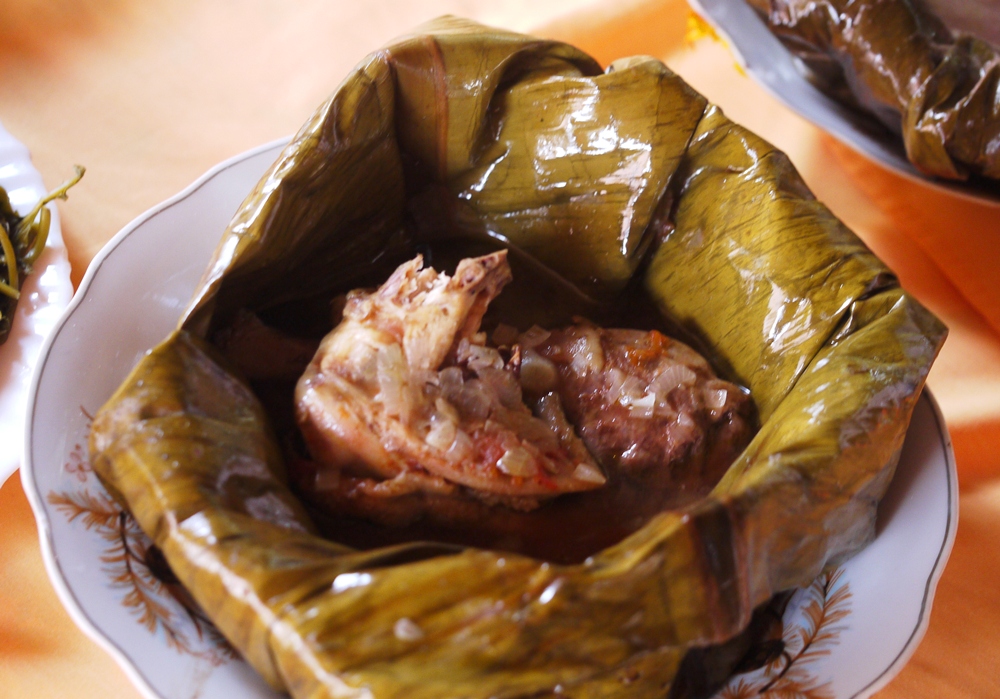
Luwombo is one of Uganda’s most memorable culinary experiences. Meat, chicken, fish, mushrooms, or groundnuts are seasoned and wrapped carefully in banana leaves, then slow-steamed until the flavors concentrate.
The banana leaf is more than packaging. It keeps the food moist, adds a subtle green fragrance, and turns an ordinary meal into an occasion. Luwombo has strong associations with Buganda and is often prepared for celebrations, family gatherings, and special visits.
For a traveler, ordering luwombo feels like being let in on a local secret. When the parcel is opened at the table, steam rises, revealing tender meat or fish in a rich sauce. Pair it with matoke, rice, posho, or sweet potatoes.
If you enjoy food with a story, ask your guide about the preparation. The patience involved—wrapping, steaming, and serving—is part of what makes luwombo special.
Rolex: Uganda’s Iconic Street Food
No introduction to Ugandan cuisine is complete without the Rolex.
Despite the name, this has nothing to do with watches. A Rolex is a chapati—thin, griddled flatbread—wrapped around a fried egg omelette, usually with onion, tomato, cabbage, and sometimes chili or other vegetables. It is quick, inexpensive, filling, and beloved across the country.
The name is commonly explained as a playful contraction of “rolled eggs,” though its exact origin is debated. What matters most is the experience: watching a vendor pour beaten egg onto a hot plate, lay the chapati over it, add vegetables, roll it tightly, and hand it to you wrapped in paper.
A Rolex is perfect:
- After an early morning game drive
- As a quick lunch between activities
- During a Kampala street-food walk
- Late in the evening when you want something warm and satisfying
Ask for it mild if you are sensitive to chili. Then take your first bite while it is still hot.
Groundnut Sauce: The Flavor That Ties It Together
Groundnut sauce—made from roasted peanuts ground into a smooth paste and simmered with water, onion, garlic, salt, and often tomato or greens—is one of the most important flavors in Ugandan home cooking. It is creamy, nutty, savory, and deeply comforting.
You will find it served with matoke, rice, posho, sweet potatoes, cassava, and sometimes meat or vegetables. For vegetarian travelers, groundnut sauce with matoke, beans, and greens can be one of the most satisfying meals on a safari.
It is also a good reminder that Ugandan cuisine is not only about dramatic dishes. Some of its greatest pleasures are humble: a well-made sauce, fresh vegetables, and a staple cooked with care.
Posho, Beans, and Everyday Comfort
Posho is a stiff maize-meal porridge, similar in concept to ugali in Kenya and Tanzania. It is dense, smooth, and designed to be eaten with the hands, often torn into pieces and used to scoop up beans, stew, or sauce.
Beans are a cornerstone of everyday Ugandan eating. Cooked slowly with tomatoes, onions, and seasoning, they are filling, affordable, and full of flavor. Combined with posho, rice, or matoke, they make a meal that feels both simple and complete.
Travelers should not overlook these everyday dishes. Safari lodges may offer international menus, but a plate of posho and beans at a local eatery can tell you as much about daily life in Uganda as any museum or cultural performance.
Fresh Fish from Uganda’s Lakes
With Lake Victoria and many other lakes and rivers, Uganda has a strong freshwater-fish tradition. Tilapia is especially popular, often grilled whole and served with chips, rice, matoke, or a fresh salad.
There is something unforgettable about eating grilled tilapia near the water: crisp skin, smoky flavor, lemon or chili on the side, and the sound of lake life around you. Fish dishes are particularly rewarding for travelers visiting Entebbe, Jinja, or lakeside communities.
Ask how the fish was caught and prepared where possible. It is a natural way to connect your meal to Uganda’s waterways and the communities that depend on them.
Northern Flavors: Millet Bread and Malakwang
Ugandan cuisine becomes even more interesting when you travel beyond the central region.
In northern Uganda, particularly among Acholi communities, millet bread—known as kwon—is a dense, dark staple often eaten with fish, beans, vegetables, or stews. It has an earthy, robust character that pairs beautifully with rich sauces.
Malakwang is another northern specialty: a tangy leafy-green dish commonly prepared with groundnut or simsim paste. Its slightly sour flavor makes it distinctive, and it is often served with millet bread, sweet potatoes, posho, or cassava.
Trying these foods is a chance to experience Uganda’s regional diversity firsthand. A thoughtful safari itinerary can connect wildlife, landscapes, and local food traditions rather than treating them as separate experiences.
Markets, Fruit, and the Joy of Snacking
Uganda’s markets are a feast before you even sit down to eat. Depending on the season, you may find mangoes, pineapples, passion fruit, jackfruit, bananas, avocados, papayas, watermelon, and citrus displayed in brilliant piles.
Street snacks are equally inviting. Look for roasted maize, roasted plantains, chapati, samosas, groundnuts, and fresh fruit. As with street food anywhere, choose stalls with high turnover, freshly cooked food, and good hygiene practices.
A market visit can be one of the most rewarding cultural activities on a Uganda safari. You will see how people shop, hear several languages at once, and taste produce at its freshest. Your Africa Exquisite Tours guide can help you navigate respectfully, translate when needed, and introduce you to vendors and foods you might otherwise overlook.
Eating Respectfully in Uganda
Food is hospitality in Uganda. If someone offers you tea, fruit, or a share of a meal, accepting—even a small portion—is often appreciated.
A few simple guidelines will make your culinary experiences smoother:
- Ask before photographing people, markets, or private kitchens.
- Use your right hand when eating with your hands, where appropriate.
- Try a little of everything, especially when invited to share.
- Ask about spice levels before adding chili.
- Communicate allergies and dietary needs clearly when booking your safari.
- Be patient: freshly prepared food may take time, and that time is part of the experience.
You do not need to love every dish. But approaching Ugandan food with curiosity and respect will almost always lead to warmer conversations and better meals.
Food as Part of Your Safari
Uganda is famous for gorilla trekking in Bwindi, chimpanzee tracking in Kibale, and classic wildlife viewing in parks such as Queen Elizabeth and Murchison Falls. But the country’s food culture deserves a place on the itinerary too.
Imagine beginning the day with strong Ugandan tea before heading into the forest, returning from a gorilla trek to a hearty local lunch, then ending the evening with grilled tilapia beside Lake Victoria. Or picture a Kampala food experience before your safari begins: colorful markets, the aroma of chapati, a Rolex fresh off the grill, and your first taste of matoke with groundnut sauce.
Africa Exquisite Tours designs journeys that connect Uganda’s wildlife, people, and flavors. Whether you are traveling through Uganda, Kenya, Tanzania, or Rwanda, food becomes a bridge between destinations—a way to understand East Africa not only through its animals and landscapes, but through the tables where its communities gather.
Taste Uganda, Then Keep Exploring
Ugandan cuisine is welcoming, nourishing, and full of character. Matoke will ground you. Luwombo will surprise you. A Rolex will become your favorite roadside ritual. Groundnut sauce will follow you home in memory long after your safari ends.
Come for the gorillas, the Big Five, and the extraordinary landscapes—but leave room at the table. Uganda’s food is not a side note to the safari; it is part of the journey.
Ready to experience Uganda beyond the game drives? Contact Africa Exquisite Tours to design a safari that includes unforgettable wildlife, culture, and culinary experiences across Uganda, Kenya, Tanzania, and Rwanda.
Plan your journey
Your African Journey Starts Here
Tell us where you want to go, what you want to experience, and we’ll create a journey around you.